
What Is Lorem Ipsum?
Lorem ipsum is a form of placeholder text that has been the standard in the graphic design, printing, and digital publishing industries for over five centuries. It is used to fill space in a visual layout or design mockup when the final content has not yet been written — allowing designers and developers to focus on the visual structure, typography, and composition without the distraction of meaningful text.
The most recognized version begins with:
“Lorem ipsum dolor sit amet, consectetur adipiscing elit, sed do eiusmod tempor incididunt ut labore et dolore magna aliqua.”
Despite looking like Latin, the passage is intentionally scrambled and grammatically meaningless — an imperfect echo of classical Latin philosophy, preserved across centuries.
How to Use the Lorem Ipsum Generator
Using a Lorem Ipsum generator is straightforward. Simply select how much dummy text you need — by paragraphs, words, sentences, or bytes — and the generator will produce it instantly. You can then copy and paste it into your design tool, content management system, HTML file, or wireframe.
Common use cases include:
- Populating wireframes in Figma, Sketch, or Adobe XD
- Filling template sections in WordPress, Webflow, or Squarespace
- Adding placeholder content to HTML/CSS mockups during front-end development
- Testing how a layout responds to different amounts of text
- Generating realistic-looking dummy data for database seeding or app prototyping
The generator on this page allows you to choose the number of paragraphs, toggle the inclusion of the classic opening line (“Lorem ipsum dolor sit amet…”), and copy the result in one click.
The History of Lorem Ipsum: From Ancient Rome to the Modern Web
Understanding where lorem ipsum comes from gives you a deeper appreciation for why it has endured as the designer’s go-to filler text for so long.
The Original Latin Source: Cicero’s De Finibus
Lorem ipsum is derived from De Finibus Bonorum et Malorum (“On the Extremes of Good and Evil”), a philosophical treatise written by the Roman orator and statesman Marcus Tullius Cicero around 45 BC. In this work, Cicero explores the foundations of Stoic and Epicurean ethics, arguing about the nature of pleasure and pain.
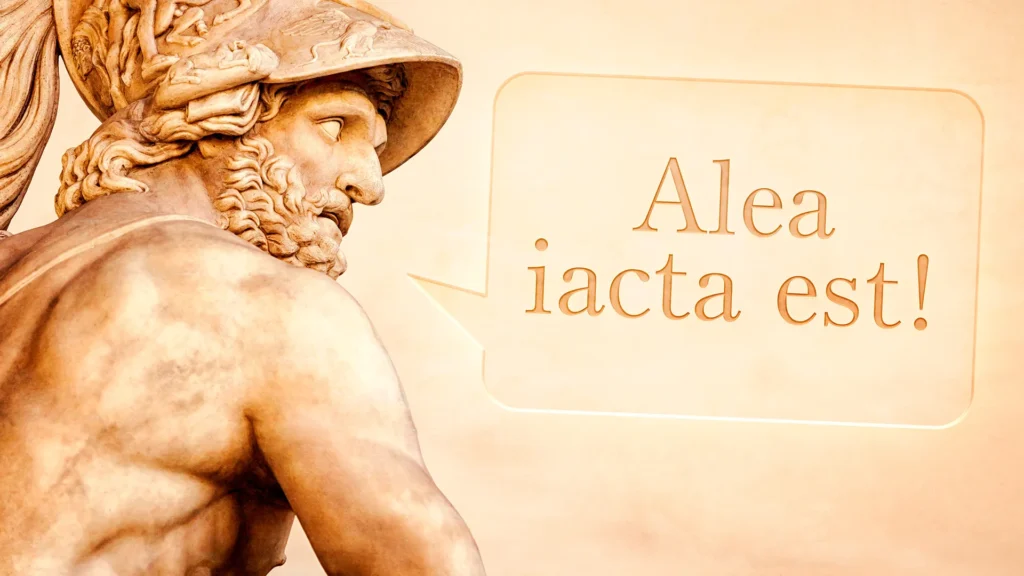
The passage most closely associated with lorem ipsum comes from Book I, sections 1.10.32–33:
“Neque porro quisquam est, qui dolorem ipsum quia dolor sit amet, consectetur, adipisci velit, sed quia non numquam eius modi tempora incidunt ut labore et dolore magnam aliquam quaerat voluptatem.”
In English (translated by H. Rackham, 1914):
“Nor is there anyone who loves or pursues or desires to obtain pain of itself, because it is pain, but occasionally circumstances occur in which toil and pain can procure him some great pleasure.”
This passage — which speaks of pain, pleasure, and human striving — was taken out of context, scrambled, and repurposed as filler text, stripped of its philosophical meaning in the process.
Richard McClintock and the Discovery
For most of the 20th century, lorem ipsum was widely believed to be pure gibberish — letters arranged to vaguely resemble Latin without actually meaning anything. That changed when Richard McClintock, a Latin professor at Hampden-Sydney College in Virginia, noticed the word consectetur — an uncommon but genuine Latin term — in a lorem ipsum passage and traced it back to De Finibus.
His finding, published in a letter to the design publication Before & After, confirmed that lorem ipsum was not invented nonsense, but a garbled fragment of real classical philosophy.
The 15th-Century Typesetter Theory
The most widely accepted theory holds that an unknown typesetter in the 15th century — likely during the early years of the printing press in Europe — deliberately scrambled sections of Cicero’s text to create neutral, readable-looking blocks of type for use in specimen books. These books allowed printers to showcase their typefaces without using recognizable or politically sensitive text.
By scrambling the Latin, the typesetter produced something that looked like real text at a glance but communicated nothing — ideal for demonstrating fonts without distraction.
The 1914 Alternative Theory
A competing theory suggests lorem ipsum may be far more recent. A 1914 Loeb Classical Library edition of De Finibus reportedly ran out of room on page 34 for the full phrase “dolorem ipsum” (meaning “pain itself”), leaving “do-” on one page and “lorem ipsum” at the top of the next. Under this theory, a 20th-century graphic designer stumbled upon that page break and repurposed the phrase — creating the modern lorem ipsum tradition accidentally.
Letraset and the 1960s Revival
Lorem ipsum’s modern dominance began in the 1960s, when the French lettering company Letraset printed the passage on their famous dry-transfer lettering sheets. Graphic designers, architects, and advertisers used these sheets to create professional-looking layouts by rubbing the lettering onto paper. Lorem ipsum text was included in a range of fonts and sizes, making it instantly recognizable in design circles.
PageMaker and the Digital Age
The 1980s and 1990s brought lorem ipsum into the digital world. Aldus Corporation — later acquired by Adobe — bundled lorem ipsum placeholder text with their landmark desktop publishing software PageMaker, which became the industry standard for layout design. Other word processors and DTP software followed suit, and lorem ipsum became a universal default across the design and publishing industries.
Today, lorem ipsum is embedded in virtually every major design tool, web framework, and CMS theme in existence.
What Does Lorem Ipsum Mean? (Full Translation)
Since lorem ipsum is a scrambled version of Latin, it doesn’t translate cleanly. Google Translate has historically returned nonsensical or absurd results when fed the passage (at various times rendering it as “NATO” or “China”).
The closest meaningful interpretation, based on the original Cicero text, is something like:
“Pain itself, because it is pain, let it be sorrow — let him love it, let him pursue it, wishing for its acquisition…”
In 2014, translator Jaspreet Singh Boparai attempted a full English rendering of the scrambled lorem ipsum passage, aiming to preserve its level of incoherence in English. The result, described by literary critic Nick Richardson as resembling “extreme Mallarmé or a Burroughsian cut-up,” demonstrates just how meaningfully meaningless the original passage is.
The takeaway: lorem ipsum is not meant to be read. It is meant to be seen — to look like real text without conveying real information.
Why Use Lorem Ipsum? The Case for Placeholder Text
Despite the availability of alternatives, lorem ipsum remains the dominant choice for placeholder text for several excellent reasons.
1. It Doesn’t Distract
When real or meaningful text is used in a design mockup, stakeholders — clients, managers, team members — inevitably start reading and reacting to the words rather than evaluating the design. Lorem ipsum short-circuits this by providing text with no semantic meaning, keeping focus on layout, typography, color, and visual hierarchy.
2. It Mimics Natural Language Patterns
Because lorem ipsum is derived from Latin, it has a natural distribution of letters, spaces, and word lengths that closely mirrors English and other Western European languages. This makes it look more realistic than random strings of characters.
3. It’s Universally Understood
In any professional design context — whether you’re sharing a file with a developer in Berlin, a client in Tokyo, or a print shop in Buenos Aires — lorem ipsum is universally recognized as placeholder content. No one mistakes it for real copy or assumes it represents final content.
4. It’s Available Everywhere
Every major design tool generates lorem ipsum text natively. This ubiquity means there’s zero friction in using it.
The Great Lorem Ipsum Debate: Arguments For and Against
Lorem ipsum is not without its critics, and the debate within the UX and content strategy communities is substantive.
The Case Against Lorem Ipsum
Content strategists and UX practitioners have raised serious objections to using lorem ipsum in design workflows:
It ignores real-world content constraints. Actual copy is rarely uniform in length. Headlines vary, paragraphs expand and contract, and copy hierarchies reflect editorial decisions. Lorem ipsum treats all text as interchangeable, which can lead to layouts that fall apart when real content is introduced.
It separates content from design. Modern content-first design philosophy holds that design should emerge from content requirements, not the other way around. Using lorem ipsum encourages “design first, fill in content later” — an approach that often produces designs poorly suited to the actual message.
It can lead to “lorem ipsum in production.” It’s surprisingly common for placeholder text to make it into published websites, printed materials, or even physical products — a costly and embarrassing mistake.
It deprioritizes copy. When designs are presented with lorem ipsum, clients and stakeholders may not realize that final copy still needs to be written, leading to timeline and budget surprises.
The Case For Lorem Ipsum
Early-stage layout work doesn’t require real content. When you’re exploring typographic scales, grid systems, or color palettes, content specifics are irrelevant. Lorem ipsum is perfectly suited to this exploratory phase.
Real content isn’t always available. In many projects, copy is written after design approval — by a different team or vendor. Holding design work hostage to copy delivery slows projects down unnecessarily.
It prevents premature content fixation. Using real copy too early can cause teams to “lock in” specific phrasing before the design is proven, reducing flexibility.
The solution is clear communication. Most of the risks associated with lorem ipsum can be mitigated by clearly labeling all placeholder content and establishing shared expectations about the design-to-content handoff process.
Types of Lorem Ipsum: A Complete Taxonomy
Not all lorem ipsum is created equal. The term now describes an entire category of placeholder text, with many thematic and functional variations.
Standard Lorem Ipsum
The classic passage derived from Cicero, beginning with “Lorem ipsum dolor sit amet…” This is what most generators produce by default.
HTML Lorem Ipsum
Lorem ipsum formatted with HTML tags (<p>, <h1>, <strong>, <em>, <ul>, <li>, etc.), ready to paste directly into web templates. Useful for developers testing styled components.
Blind Text Alternatives
Some placeholder text generators produce English-language dummy text instead of Latin-derived lorem ipsum. This can be useful when presenting mockups to non-design stakeholders who might be confused by Latin-looking text.
Thematic Lorem Ipsum Generators
A cottage industry of novelty lorem ipsum generators produces placeholder text on specific themes. Some popular examples:
- Hipster Ipsum – Uses contemporary buzzwords and artisanal language
- Bacon Ipsum – Replaces filler words with cuts of meat
- Corporate Ipsum – Generates business jargon placeholder text
- Pirate Ipsum – For the nautically inclined designer
- Zombie Ipsum – Horror-themed placeholder text
- Cupcake Ipsum – Sweet, dessert-themed placeholder text
- Fillerama – Text drawn from popular TV shows and films
These novelty generators are best used internally or in informal presentations; they should not appear in client deliverables.
Structured Placeholder Text
Some tools generate highly structured lorem ipsum that mirrors specific content types — blog post structures, e-commerce product descriptions, legal boilerplate, or social media post formats. This is useful when testing how a CMS or UI framework handles different content structures.
Lorem Ipsum in Design Tools: A Practical Guide
Every major design and development tool includes lorem ipsum support. Here’s how to use it in the most popular environments.
Figma
In Figma, select any text layer, then go to Menu → Plugins → Lorem Ipsum (or install a community plugin). Figma’s built-in text generation produces standard lorem ipsum paragraphs that conform to your text layer’s constraints.
Adobe XD
In Adobe XD, right-click any text element and select Edit Text → Add Lorem Ipsum. XD will automatically fill the text area with appropriately sized placeholder content.
Sketch
In Sketch, double-click a text layer to enter text editing mode, then go to Insert → Lorem Ipsum from the menu bar. The plugin ecosystem also offers more control over paragraph count and word limits.
InDesign
Adobe InDesign has native lorem ipsum support. Go to Type → Fill with Placeholder Text to fill any text frame. InDesign uses a variation of the standard lorem ipsum passage.
VS Code and Development Environments
In Visual Studio Code, the Emmet abbreviation toolkit (built-in) allows you to type lorem followed by a number and press Tab to generate placeholder text. For example:
lorem→ one paragraphlorem10→ 10 words of placeholder textp*3>lorem→ three paragraph elements filled with lorem ipsum
WordPress
WordPress Gutenberg editor supports lorem ipsum through various plugins. Many page builder plugins like Elementor and Divi also include built-in lorem ipsum generators.
Bootstrap and CSS Frameworks
When scaffolding Bootstrap, Tailwind CSS, or similar framework templates, lorem ipsum text is commonly used to simulate content columns, cards, and typography demonstrations in official documentation and starter templates.
Lorem Ipsum for Web Developers: Technical Use Cases
Beyond static design mockups, lorem ipsum serves important technical functions in web development.
Testing Typography and Responsive Layouts
When implementing a typographic scale (font sizes, line heights, letter spacing), lorem ipsum provides consistent input to evaluate how your CSS renders across different screen sizes. A responsive layout might look great with a 3-word headline but collapse with a 12-word one — lorem ipsum helps stress-test these cases.
Component Testing
Front-end component libraries (React, Vue, Angular, Svelte) need to be tested with realistic content. Lorem ipsum allows developers to verify that a Card component, for instance, handles variable-length titles, long descriptions, and overflowing content gracefully.
Content Management System (CMS) Seeding
When setting up a CMS for a new project, developers often populate the database with lorem ipsum content to give clients a working preview of the site before real copy is written. This is essential for:
- Showing navigation behavior with realistic menu items
- Demonstrating pagination with multiple content entries
- Testing search functionality
- Revealing layout issues with realistic content volumes
Performance Testing
Load testing a web application often requires realistic data volumes. Lorem ipsum text can be used to generate database records, simulating the memory and rendering load of production content.
Screenshot and Preview Generation
Many SaaS products generate automated screenshots of customer interfaces for documentation, onboarding materials, or social proof. Lorem ipsum is used to populate these environments so sensitive real data is never exposed in marketing materials.
SEO Considerations: Should You Publish Lorem Ipsum on Your Website?
This is one of the most important questions for developers and marketers: does lorem ipsum hurt your SEO?
The Short Answer: Yes, If It’s Indexed
If Google’s crawlers index a page with lorem ipsum placeholder text, several negative consequences can follow:
Thin content penalties. Google’s quality guidelines explicitly penalize pages with low-quality or meaningless content. A page full of lorem ipsum with no meaningful copy sends a clear signal that the page is not ready for public consumption.
No keyword relevance. Lorem ipsum contains no keywords, entities, or semantic meaning. A page populated with placeholder text cannot rank for any search term.
Poor user experience signals. If a user lands on a page of lorem ipsum from a search result, they will immediately bounce — driving up your bounce rate and sending negative engagement signals back to Google.
How to Prevent Accidental Lorem Ipsum Indexing
- Use
<meta name="robots" content="noindex">on any page containing placeholder content - Keep development, staging, and preview environments behind authentication or IP restrictions
- Use CMS preview modes that are inaccessible to search engine crawlers
- Conduct a content audit before launch to identify any lorem ipsum that survived into production
The Strategic Use of Placeholder Text in Development
The correct approach is to develop with lorem ipsum freely — but in environments that are not crawlable by search engines. A well-configured robots.txt file and consistent use of noindex directives on non-production environments will protect you from any SEO consequences.
Lorem Ipsum Across Different Languages and Scripts
While lorem ipsum is Latin-derived, placeholder text generators for other languages and scripts exist for international projects.
Non-Latin Scripts
For projects targeting non-Latin script markets, Latin lorem ipsum is visually inappropriate — it doesn’t reflect the actual character density, glyph complexity, or text direction of the target language. Specialized placeholder text generators exist for:
- Arabic and Hebrew (right-to-left scripts)
- Chinese, Japanese, and Korean (CJK) characters
- Devanagari (used in Hindi, Sanskrit, Marathi, and other South Asian languages)
- Cyrillic (Russian, Bulgarian, Serbian, etc.)
- Thai and Southeast Asian scripts
Using language-appropriate placeholder text is critical for evaluating typography, line height, and text rendering in internationalized (i18n) projects.
RTL (Right-to-Left) Layout Testing
Right-to-left layout testing is a common area where developers underestimate complexity. Using lorem ipsum in an RTL context without adjusting the text direction can mask alignment and wrapping issues that will appear with real Arabic or Hebrew content. Purpose-built RTL lorem ipsum generators help surface these problems early.
Frequently Asked Questions About Lorem Ipsum
What does “Lorem ipsum dolor sit amet” mean?
It is a scrambled fragment of a philosophical text by the Roman statesman Cicero, originally discussing the nature of pleasure and pain. In its current form, the phrase is intentionally meaningless, designed to function as neutral visual filler without conveying any real message.
Is Lorem Ipsum actual Latin?
It is derived from Latin, but it is not grammatically correct or coherent Latin. The original passage from Cicero’s De Finibus Bonorum et Malorum was intentionally scrambled, making the resulting text grammatically nonsensical while retaining a Latin-like appearance.
Who invented Lorem Ipsum?
The modern lorem ipsum passage is attributed to an anonymous typesetter, likely working in the 15th century, who scrambled sections of Cicero’s De Finibus to create neutral filler text for printing specimens. The authorship remains unknown.
Is Lorem Ipsum copyrighted?
No. Lorem ipsum text is in the public domain. The original source — Cicero’s De Finibus Bonorum et Malorum, written around 45 BC — is far beyond any copyright term, and the scrambled lorem ipsum derivative has no single identifiable author to hold a copyright claim.
Why do designers use Latin for placeholder text?
Latin is used because it looks plausible to Western eyes without being readable in any modern language. This prevents the reader from engaging with the text’s meaning — preserving focus on the visual design rather than the content.
Can Lorem Ipsum hurt my website’s SEO?
Yes, if it is indexed by search engines. Placeholder text contains no keywords or semantic meaning, and pages filled with lorem ipsum may be penalized as thin or low-quality content. Always use noindex directives on development and staging environments to prevent lorem ipsum from being crawled.
What is the full Lorem Ipsum passage?
The standard full lorem ipsum passage, as commonly used in design and publishing, is:
“Lorem ipsum dolor sit amet, consectetur adipiscing elit, sed do eiusmod tempor incididunt ut labore et dolore magna aliqua. Ut enim ad minim veniam, quis nostrud exercitation ullamco laboris nisi ut aliquip ex ea commodo consequat. Duis aute irure dolor in reprehenderit in voluptate velit esse cillum dolore eu fugiat nulla pariatur. Excepteur sint occaecat cupidatat non proident, sunt in culpa qui officia deserunt mollit anim id est laborum.”
What are some alternatives to Lorem Ipsum?
Popular alternatives include blind text (readable English placeholder text), thematic generators (Bacon Ipsum, Hipster Ipsum, etc.), AI-generated contextually relevant placeholder text, and real content from public domain sources. Each has appropriate use cases depending on the context.
How do I generate Lorem Ipsum in HTML format?
Use the generator on this page and select the “HTML” output option. This will wrap each paragraph in <p> tags, making it ready to paste directly into your markup. Many generators also offer headers, lists, and other semantic HTML structures.
What’s the difference between Lorem Ipsum and dummy text?
“Dummy text” is the broader category. Lorem ipsum is the most widely recognized specific example of dummy text — a particular scrambled-Latin passage that has become the industry default. Other types of dummy text include random-word generators, content-aware placeholders, and thematic generators.
Does Figma have Lorem Ipsum built in?
Yes. Figma supports lorem ipsum text generation natively through its plugins ecosystem and third-party integrations. The “Lorem ipsum” plugin by Rasmus Andersson is one of the most popular, and many other Figma plugins include lorem ipsum as a feature.
What does Lorem Ipsum look like with different fonts?
The main purpose of lorem ipsum in its original context was to demonstrate typefaces. The neutral, realistic-looking text lets viewers evaluate how a font renders across a full alphabet of characters and punctuation marks — including ascenders, descenders, and ligatures — without being influenced by meaning or message.
A Brief Timeline of Lorem Ipsum
| Era | Event |
|---|---|
| 45 BC | Cicero writes De Finibus Bonorum et Malorum |
| ~15th century | Unknown typesetter scrambles De Finibus for a type specimen book |
| 1914 | Loeb Classical Library edition of De Finibus published (alternative origin theory) |
| 1960s | Letraset popularizes lorem ipsum on dry-transfer lettering sheets |
| 1983–1985 | Aldus PageMaker bundles lorem ipsum text, introducing it to digital design |
| 1990s | Microsoft Word and other word processors adopt lorem ipsum as placeholder text |
| 1994 | Emergence of early lorem ipsum generator websites |
| 2000s | Lorem ipsum becomes standard in HTML/CSS templates, CMS themes, and web frameworks |
| 2007 | Emmet (then Zen Coding) introduces lorem as an abbreviation in code editors |
| 2014 | Richard McClintock’s discovery gains widespread media coverage |
| Present | Lorem ipsum is supported natively in Figma, Adobe XD, InDesign, VS Code, and virtually every major design and development tool |
Conclusion: Why Lorem Ipsum Has Survived Five Centuries
Few tools in any professional field can claim a half-millennium of continuous use. Lorem ipsum has persisted not because there are no alternatives — there are many — but because it solves a specific, enduring problem with elegant simplicity: how to evaluate the visual quality of a design without the distraction of readable content.
From Cicero’s philosophical reflections on pleasure and pain, to Letraset sheets rubbed onto architectural drawings in the 1960s, to Figma mockups shared via link today, lorem ipsum has adapted to every medium and era it has encountered. Its staying power is a testament to how a good solution, even an accidental one, outlasts its context.
Whether you’re a graphic designer building your first Figma component, a developer seeding a database, a UX researcher testing a prototype, or a content manager checking a CMS template, the lorem ipsum generator above gives you instant access to this timeless placeholder — ready to support whatever you’re building next.